There is a specific kind of buyer who walks into a boot shop in Sydney intending to buy something other than Blundstones and leaves with Blundstones. They came in with a different brand in mind — something more contemporary, perhaps, or more obviously stylish. But then the shop assistant pulls out both options and asks them to describe a typical week: the commute, the job site, the Saturday morning walk, and the dinner out afterwards. By the time that conversation ends, Blundstone boots in Sydney are sitting on the counter. Not because the salesperson pushed them, but because the boot answers every part of the question and most alternatives only answer one.
The Sandstone Problem
Sydney is built on sandstone, and the city’s footpaths, steps, and kerbing reflect that in ways visitors notice and locals stop seeing. Sandstone is abrasive in a way concrete is not. It grinds at the edges of soles, attacks stitching where it meets the upper, and creates a dragging friction underfoot on wet mornings that makes slick-soled boots genuinely dangerous on certain streets in the CBD and Inner West. The Goodyear welt construction used in core Blundstone models means the sole is stitched and bonded separately from the upper—so when the sole eventually wears, it can be replaced without replacing the boot. Most Sydney wearers do not know this. They assume a worn sole means the end of the boot. It does not, and the ability to resole dramatically changes the long-term calculation.
Why the Elastic Works Harder Here
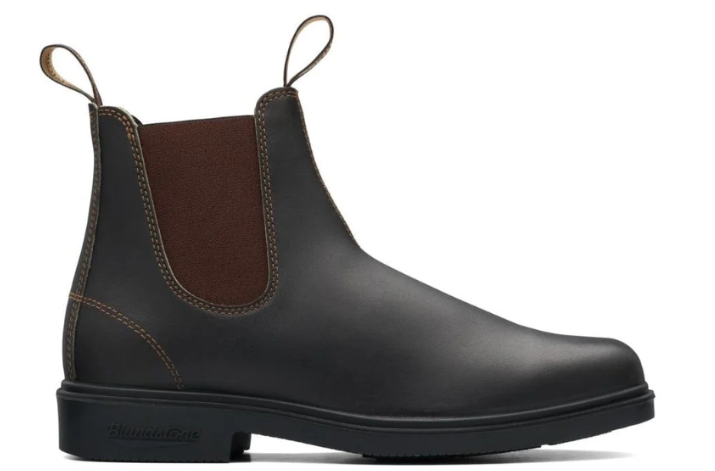
Sydney’s humidity sits higher than most of Australia’s southern cities for much of the year. That matters for footwear in a specific way: moisture causes leather to expand slightly and then contract as it dries, and boots with rigid ankle structures develop pressure points that comfortable boots in drier climates never produce. The elastic side panel on a Blundstone accommodates that micro-expansion naturally. The boot moves with the foot rather than fighting it. This is why Blundstone boots in Sydney are particularly well suited to people who wear them for long stretches without removing them — hospitality workers on full shifts, tradespeople through nine-hour days, nurses crossing hospital floors. The elastic is not a shortcut around laces. In this climate, it is a structural response to how feet actually behave.
What Heat Does to Cheaper Boots
Sydney summers are not kind to adhesive. Boots constructed primarily with glued soles – the majority of mid-range fashion boots sold in the city – begin delaminating in sustained heat. The glue softens on hot pavement, and the bond between the sole and upper weakens progressively until the sole peels at the toe and then across the heel. This happens faster than most people expect, particularly with boots stored in direct sunlight in cars or on balconies. The construction method used in quality Blundstone boots in Sydney uses a heat-resistant polyurethane sole bonded with a process designed to withstand temperature ranges that peel apart cheaper constructions. Summer in Sydney is not a theoretical stress test. For footwear, it is a genuine quality filter.
The Fit Nobody Expects
People who have never worn Blundstones often assume they will fit loosely—that the slip-on design means a boot that moves around the foot rather than holding it. The opposite is true once the boot breaks in. The leather upper moulds to the specific shape of the wearer’s foot over the first few weeks of use, producing a fit that lace-up boots with rigid ankle collars rarely achieve. Sydney buyers who are between sizes are often advised to size down rather than up, because the leather will stretch to accommodate but will not shrink back if the boot is too long. This is counter-intuitive enough that a lot of first-time buyers get it wrong, end up with a poor fit, and conclude incorrectly that the boot does not suit their foot — when in fact they just bought the wrong size.
Conclusion
Most boot purchases in Sydney are made on appearance and regretted on durability. The sandstone grinds through soles, the humidity defeats rigid constructions, and the heat separates glued seams before the first summer ends. Blundstone boots in Sydney keep appearing on the feet of people who have already been through that cycle once. The boot earns its place not through marketing but through the specific ways it handles what this city does to footwear – and the fact that when the sole eventually wears out, the boot itself does not have to.